

SOLAR
Solar’s simplicity is part of its attraction. Solar energy systems are easy to install and easy to maintain. Solar’s ability to save you money is straightforward.
Solar’s simplicity is part of its attraction. Solar energy systems are easy to install and easy to maintain. Solar’s ability to save you money is straightforward.
Solar in California is no longer one-size-fits-all. Many homeowners now choose options like solar PPAs, leases, or prepaid structures to access solar without owning the system. The right approach depends on your home, roof condition, and how you want to manage long-term energy costs.
Solar is one of the most straightforward ways to reduce reliance on utility power. A well-designed system is reliable, low maintenance, and built to operate for decades.
For many homeowners, solar is no longer just about saving money. It is about creating more predictable energy costs in a market where electricity prices continue to change.
Yes, but the way homeowners go solar has changed.
Electricity rates continue to increase and vary depending on time of use, making monthly bills less predictable. Solar allows homeowners to offset a portion of that usage and better manage long-term energy costs.
Today, many homeowners prioritize stability and flexibility over ownership alone, which is why financing options have become an important part of going solar.
Homeowners now have multiple ways to access solar depending on their goals, budget, and preference for long-term responsibility.
Pay for the electricity the system produces instead of owning the equipment. Often requires little or no upfront cost and provides a more predictable energy rate.
Make a fixed monthly payment for the use of the system without owning it. Offers simplicity and consistent monthly costs.
Make a single upfront payment to secure long-term energy use without ongoing monthly solar payments. Maintenance and system performance remain the responsibility of the system owner.

Battery storage allows homeowners to store excess solar energy and use it when electricity rates are higher or during outages.
In California, batteries are often used to:
Not every home requires a battery, but it can be an important part of a complete energy strategy.
If your roof is older, it is often recommended to replace it before installing solar.
Solar systems are designed to last decades, so installing on an aging roof can lead to additional costs later if the roof needs to be replaced.
Planning roofing and solar together can help:
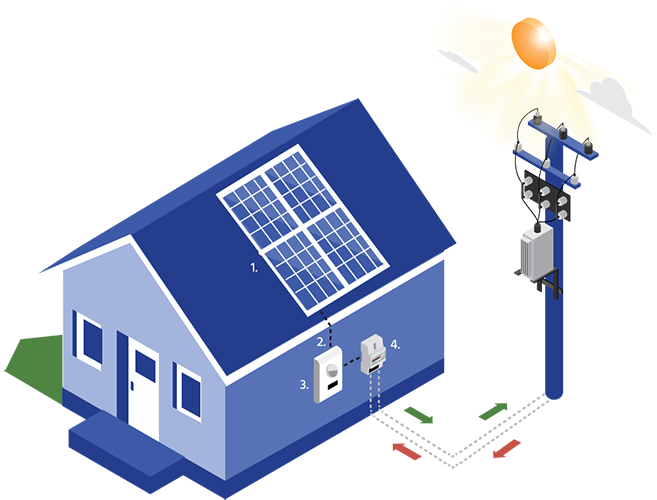
Solar photovoltaic (PV) systems convert sunlight into electricity your home can use in real time.
Solar systems are long-term assets, and warranties help protect performance over time.
Key protections include:
Working with an experienced installer helps ensure these warranties remain meaningful over time.
The installation itself is typically completed in 1–3 days, but the full process includes:
An experienced installer manages each step from start to finish.
For more details on going solar, from getting quotes to turning on the system, download our free roadmap infographic.
Solar is not just about equipment. It is about long-term performance and accountability.
When evaluating an installer, consider:
Solar is a long-term decision. Choosing the right installer matters.
Solar panels generate electricity from sunlight, which is converted into usable power for your home. Your home uses this energy first, reducing the amount of electricity you need to purchase from the utility.
Yes. As California utility rates continue to rise, solar remains one of the best ways to control long-term energy costs. Instead of paying ever-increasing utility bills, you can lock in a lower, more predictable electricity rate. Prepaid solar leases and Power Purchase Agreements (PPAs) also make it possible to benefit from available federal incentive savings with little or no upfront cost.
A PPA involves paying for electricity over time, while a prepaid lease involves a one-time upfront payment with no ongoing solar payments.
Yes. Options like PPAs and leases allow homeowners to access solar without purchasing the equipment or taking on maintenance responsibilities.
If your roof is older, it is often recommended to replace it before installing solar to avoid additional costs later.
Solar systems require minimal maintenance. Occasional cleaning and monitoring are typically enough to keep the system operating efficiently.
Most solar panels are designed to last 25 years or more, with gradual performance decline over time.
Factors include roof condition, sun exposure, energy usage, and your long-term goals. A consultation helps determine the best approach.
California offers state and local programs to help lower the cost of going solar. Depending on where you live, special equity grants or local utility cash rebates may also be available. Under the state’s current NEM 3.0 rules, homeowners get the most value by using their solar power at home, rather than selling it back to the grid. If you want to get started for zero upfront costs, solar leases or Power Purchase Agreements (PPAs) let you lock in lower, predictable electricity rates immediately.
Battery storage provides numerous advantages for the homeowner with a new or existing solar system. Batteries reduce homeowners’ dependence on the electrical grid. They store energy and power critical loads (refrigerator, internet, lighting, and medical devices) during Public Safety Power Shutoffs (PSPS) and grid outages.
Batteries protect homeowners from PG&E, SCE, and SDG&E’s rising utility rates. They can store electricity that’s generated during the day to be used during the peak time-of-use (TOU) pricing periods. They also help homeowners maximize self-consumption instead of exporting electricity at lower compensation rates under NEM 3.0.
Be sure to ask your installation expert about any state or utility incentive programs that a solar energy storage system may qualify for.
Due to their efficiency, lifespan, and compact size, lithium-ion batteries have become the industry standard. Several popular residential options exist, including the Tesla Powerwall 3, Enphase IQ Battery 5P, and FranklinWH aPower 2. The battery that’s best for your home depends on your average energy usage, solar system compatibility, desired backup duration, whole-home vs. partial-home backup, and budget.
Stackable battery systems like SigEnergy’s offer another flexible option. They allow homeowners to add batteries to their existing systems to increase storage capacity over time without replacing their system.
If you have solar panels installed on an aging or damaged roof, you may need to have them removed later for roof replacement. If the installation is performed poorly, improper flashing or roof penetrations can lead to water intrusion. Roof damage may occur during a solar installation if the installers are inexperienced.
Roofs that were not designed for additional loads, especially on older homes, may require structural evaluation and/or reinforcement. Any existing roof issues, such as missing shingles, cracked tiles, or deteriorated underlayment, should be repaired or replaced before a solar system is installed. Tile roofs, which can be quite common in California, require specialized installation techniques to avoid breakage.
The roofing and solar contractor that you choose is extremely important. Be sure to hire an experienced company that can coordinate both systems to reduce future costs.
Ultimately, the value of the energy storage solution depends on the needs of the homeowner. Here’s how it breaks down:
DC battery systems work best for new solar installations because they are more efficient than AC systems. They are ideal for homeowners who are installing their battery backup systems at the same time as their solar systems. AC systems, on the other hand, are better for homeowners who already have a solar power system and would like to add storage without replacing the existing system.
Whole-home backup configurations work best for customers who want to keep their entire home powered during an outage. Whole-home systems require greater battery capacity. Essential-load backups power only the critical systems during an outage, such as the refrigerator, internet, garage door, lights, or medical equipment. These systems require less storage and cost less than whole-home systems.
Another popular backup system in California is smart energy management. These battery systems charge and discharge based on utility rates, solar production, household energy demand, and grid outages. Smart systems help to maximize savings and extend backup power. They are especially valuable in California because of TOU pricing.
Expandable battery systems like SigEnergy’s let homeowners start with one battery and add more backups as energy needs grow. They are ideal for large or growing families, future home additions, and homes with energy usage that increases over time.
Integrated solar + battery systems consist of solar panels and battery backup systems that are designed to work together as a single system. The integrated configuration simplifies monitoring and energy management. These systems maximize solar self-consumption and reduce reliance on the utility grid.
Solar panels stop producing electricity after sunset, but electricity costs in California are highest during the evening. Batteries store electricity that the panels produce during the day so it can be used during peak pricing periods. NEM 3.0 reduced export compensation, so self-consumption is more valuable.
Wildfire-related outages and PSPS events are constantly increasing the demand for backup power. As utility rates continue to increase, so does the value of stored solar energy. Finally, battery backups support greater energy resilience during emergencies and reduce dependence on noisy, unreliable fossil-fuel-powered backup generators.
Solar power systems lower electricity bills in California in several different ways, especially when paired with a battery storage system:
Your actual savings will vary since it depends on a number of factors, including energy usage, roof orientation, sun exposure, utility rate plan, battery storage, and the size of your system.
The best system for your particular home depends on a few different things:
High-efficiency monocrystalline panels generally provide the best performance for residential roofs. However, quality inverters and monitoring systems can be as important as panel selection. While initial installation cost may be a primary concern and budget solar equipment may allow you to reach your energy savings goals, premium manufacturers typically offer:
It’s crucial to consult with experienced solar installation professionals who will design a system to maximize production based on your home’s unique conditions.
Understanding your options is the first step.
Schedule a consultation to review your solar options and determine what makes sense for your home.

This website uses cookies for advertising and analytics purposes as described in our cookie policy. For more information and to set preferences, please click here. By continuing to browse this website, you accept our use of cookies.